

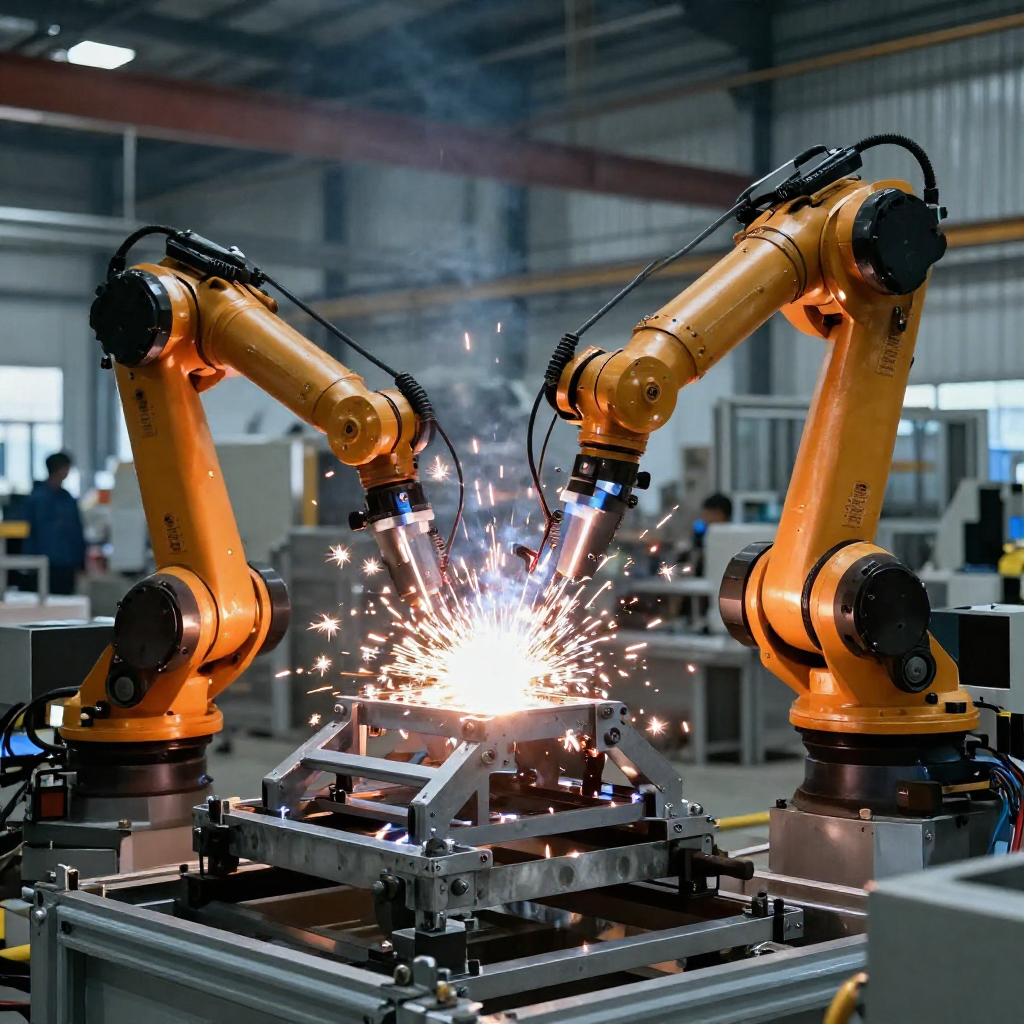
Among the most impactful automation technologies in manufacturing is robotic welding. Industries such as automotive, heavy fabrication, railway, aerospace, construction equipment, and structural steel manufacturing rely on robotic welding systems to achieve superior weld quality and faster production cycles.
Unlike manual welding, robotic welding provides consistent weld penetration, accurate positioning, and exceptional repeatability. It minimises operator fatigue while improving overall productivity.
Advantages of robotic welding include:
High-speed production
Consistent weld quality
Reduced material wastage
Improved operator safety
Lower production costs
Greater process repeatability
Better utilization of skilled manpower
Robotic welding systems can be integrated with welding positioners, manipulators, fixtures, conveyors, and automated inspection systems to create complete welding cells tailored to specific manufacturing requirements.