
Steel fabrication is all about accuracy, speed, and consistency. Whether you're manufacturing structural beams, fabricating machinery, constructing warehouses, or building heavy industrial equipment, drilling hundreds of precise holes is a routine part of the job.
While conventional drilling methods have served the industry for years, modern fabrication workshops are increasingly turning to magnetic drilling machines to improve productivity and reduce effort.
What is a Magnetic Drilling Machine?
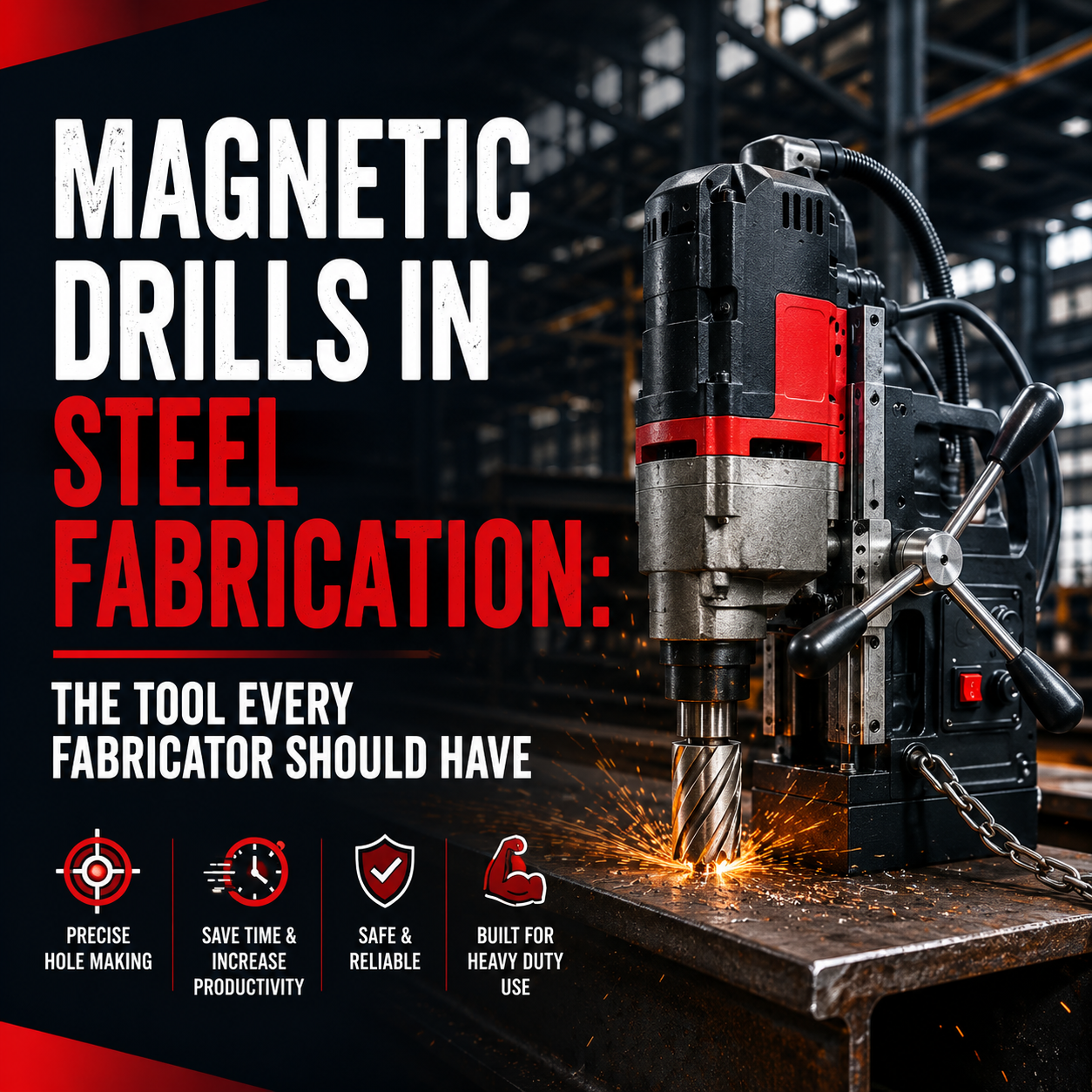
A magnetic drilling machine, often called a mag drill, is a portable drilling solution designed specifically for drilling holes in steel. It uses a powerful electromagnetic base that firmly attaches to the metal surface, allowing operators to drill accurate holes vertically, horizontally, or even overhead. Unlike a traditional drill press, a magnetic drill can be taken directly to the workpiece. This makes it ideal for large steel structures that cannot be moved to a machine.
Why Steel Fabricators Prefer Magnetic Drills
Imagine fabricating a 12-metre structural beam. Moving such a large component to a drill press is time-consuming and often impractical. With a magnetic drill, the operator simply places the machine on the beam, switches on the magnet, and starts drilling. The result is: Faster hole preparation, improved accuracy, less manual effort, and reduced setup time. For fabrication shops handling multiple projects every day, these advantages translate directly into higher productivity.
Faster Drilling with Better Results
One of the biggest advantages of magnetic drilling machines is their ability to use annular cutters. Unlike conventional twist drills that remove the entire material, annular cutters cut only the outer edge of the hole. This means faster drilling, lower power consumption, and a cleaner finish. The benefits include: Smooth and burr-free holes; less heat generation; longer cutter life; reduced machine wear. This saves both time and tooling costs.
Suitable for Every Fabrication Workshop.
Magnetic drills are widely used in: Structural steel fabrication; Pre-Engineered Building (PEB) manufacturing; Heavy fabrication; Pressure vessel manufacturing; Crane manufacturing; Bridge construction; Industrial maintenance; Plant shutdowns. Their portability makes them equally useful inside workshops and at on-site construction projects.
Improving Safety and Efficiency
Modern magnetic drills are designed with safety in mind. Features such as strong magnetic holding force, overload protection, coolant systems, and safety chains help operators work with confidence. Because the machine remains securely fixed during drilling, there is less vibration and better control, reducing operator fatigue and improving hole quality.
A Smart Investment for Fabricators:
Although a magnetic drilling machine represents an initial investment, it quickly pays for itself through faster production, lower labour costs, reduced rework, better accuracy, and increased machine utilisation. For businesses that regularly drill steel sections, channels, plates, or beams, the productivity gains are significant.
Final Thoughts:
In today's competitive fabrication industry, every minute counts. Customers expect faster deliveries, consistent quality, and cost-effective solutions. A magnetic drilling machine helps fabricators achieve all three by combining portability, precision, and performance in a compact solution. Whether you're a small fabrication workshop or a large structural steel manufacturer, investing in the right magnetic drilling machine can dramatically improve your workflow and give your business a competitive edge.
At Bhavin Group, we offer high-performance magnetic drilling machines designed for demanding industrial applications. Built for precision, reliability, and long service life, our solutions help steel fabricators drill smarter, work faster, and deliver superior results—project after project.